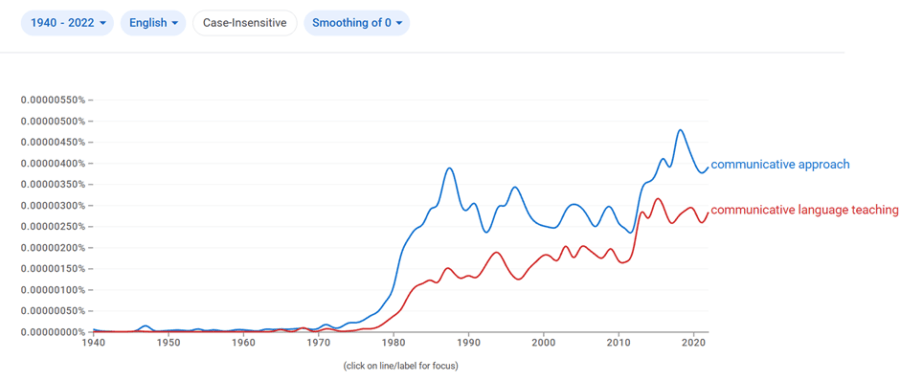
Identifying such origins is, arguably, important, because they reveal early understandings of the implications and practicability of this big idea in the classroom, shedding light onto the “significant paradigm shift” (Thornbury, 2016, p. 224) that was about to take place and defining what CLT became (both in theory and practice) and its subsequent longevity.
Author: Jason Anderson
Narratives in teacher learning
Jason Anderson and Jaber Kamali We think of life almost as one thinks of a work of fiction: we have one or many plot lines; we are a character in our own stories; others become characters in our stories; we live our stories in cultural and social settings that shape the stories we live and…… Continue reading Narratives in teacher learning

Methodological monocultures or ecosystems? A few reflections and cautions on an IATEFL plenary
I very much enjoyed Neil McMillan’s witty and creative plenary on the last day of the IATEFL Edinburgh Conference (McMillan, 2025), in which he lamented the lack of interest in methodology in recent IATEFL plenaries and made a convincing case for task-based language teaching (hereafter TBLT). I shared his shock that a key icon in…… Continue reading Methodological monocultures or ecosystems? A few reflections and cautions on an IATEFL plenary

On the Origins, History and Understanding of Test-Teach-Test in English Language Teaching
Test-teach-test is one of a number of lesson planning frameworks that are taught widely on short certification courses for English language teaching (ELT), such as the Cambridge CELTA and the Trinity CertTESOL. There are numerous overviews of it on internet blogs (e.g., British Council, n.d.), YouTube videos (e.g., Bolen, 2022) and in guides for such…… Continue reading On the Origins, History and Understanding of Test-Teach-Test in English Language Teaching

Empathetic observation
I sometimes think that educational researchers, particularly applied linguists, would benefit greatly from taking occasional time out from their work to engage in what we might call ‘empathetic observation’. It’s rather a simple idea: An academic shadows a teacher at their place of work for a few days to learn as much as possible from…… Continue reading Empathetic observation

The languages for learning framework: A potential alternative to ‘medium of instruction’
We see ‘languages for learning’ as better able to describe the complex learning affordances of multilingual classrooms because it combines an emphasis on multilingual inclusivity (‘languages’ rather than ‘medium’) with a focus on ‘learning’ (as in learning-centred education) rather than ‘instruction’. Perhaps most importantly, the ‘for’ in LFL enables us to frame languages as facilitative (resources), rather than restrictive (impedances), of learning.

The myth of a theory-practice gap in education
…what is actually being invoked is a difference between what we might call ‘academic theory’ and ‘practitioner theory’, and that is a very different type of gap…

Where the teachers are all students
If you were to pay a visit to Fithi1 Junior School on a Saturday or Sunday, you could be mistaken for presuming it was a regular day’s schooling. Children are in classes, some working silently, others engaged in discussion activities, and someone is stood at the board, guiding the learning… It’s only when you peek…… Continue reading Where the teachers are all students

“Reading aloud”: What it’s really called and why it’s essential to formal language learning
It’s an often unchallenged mantra of many ELT writers, methodologists and commentators that ‘reading aloud’ is an ineffective or misguided practice in English language classrooms (e.g., Wilson, 2019; also see this recent Twitter discussion). This mantra is frequently propagated by trainers on generic initial certification courses designed for teachers of adults, such as the Cambridge…… Continue reading “Reading aloud”: What it’s really called and why it’s essential to formal language learning

The difficulty of defining reflection
My recent contribution to the ELT Journal Key Concepts feature (Anderson, 2020a) provided an opportunity to investigate the concept of reflection. Since the 1980s, reflection has become one of the most popular buzzwords in practitioner development, including teacher education, despite Dewey’s (1910/1933) much earlier discussion of its importance, which, while frequently cited retrospectively, received comparatively…… Continue reading The difficulty of defining reflection
 Jason Anderson